The leather in your dog’s leash was processed one of several ways. Most of it was processed badly. Here’s how to tell the difference.
Walk into any pet store and you’ll find dozens of leather leashes. Most of them look similar enough. Same color, same snap hook, similar price. But the leather in those leashes was almost certainly processed in a completely different way than the leather in a quality handmade leash — and that difference defines everything about how it ages, feels, and holds up over time.
There are several methods of tanning and finishing leather, but two dominate the mass market: vegetable tanning and chrome tanning. A third tradition — harness and bridle leather — sits in its own category, prized for density and durability in working applications. Understanding the differences won’t make you a leatherworker, but it will make you a much better buyer.
What Tanning Actually Is
Leather starts as a raw animal hide. Left untreated, that hide will rot. Tanning is the process of stabilizing the hide’s collagen fibers so it becomes durable, flexible, and long-lasting. The word itself comes from the Latin tannare, derived from the tannin-rich bark historically used in the process.
The goal of both methods is the same: preserve the hide and make it usable. But the materials, timeline, and end result are vastly different.
Chrome Tanning: Fast, Cheap, and Everywhere
Chrome tanning was developed in 1858 and changed the leather industry permanently. Instead of natural plant materials, it uses chromium sulfate salts to stabilize the hide. The result is leather that can be produced in a single day rather than months — which is why today, the vast majority of leather in the world is chrome tanned.
Not all quality leather is vegetable tanned — harness leather and bridle leather have their own long traditions and produce exceptionally durable goods. What they share with vegetable-tanned leather is full-grain construction and proper finishing. What separates all of them from mass-market leather is the starting material and the care taken in processing.
Chrome tanned leather has real strengths. It’s softer from day one, easier to dye in a wide range of colors, and more water-resistant than its vegetable tanned counterpart. For fashion accessories that need to come in electric blue or bright red, chrome tanning is the only practical option.
But there are tradeoffs that matter specifically for dog gear.
Chrome tanned leather doesn’t develop a patina. It looks its best on day one, and ages in a way that’s more accurately described as wearing out than breaking in. The surface tends to crack rather than soften, and the chemical process — if not properly managed — leaves behind chromium waste that’s genuinely harmful to ecosystems. It’s why chrome tanneries in developing countries have faced significant environmental scrutiny.
And there’s a practical smell test — literally. Chrome tanned leather has a faintly chemical smell. Vegetable tanned leather has a natural, slightly sweet scent. Put both to your nose and the difference is immediately clear.
Vegetable Tanning: Slower, Older, Better
Vegetable tanning uses natural tannins extracted from tree bark — most commonly oak, chestnut, and mimosa — to stabilize the hide. The process has been used for thousands of years. Evidence of leather tanning dates back approximately 6,000 years to the Indus Valley, and the fundamental method hasn’t changed much since.
What has changed is the scale. Where chrome tanning can be largely automated, vegetable tanning requires time, skill, and attention. The hides are soaked in increasingly concentrated tannin baths over a period of weeks or months, with skilled craftspeople monitoring the process throughout. A handful of renowned tanning regions have made the craft their identity — the Conceria in Tuscany, the Rendenbach tannery in Germany, J&FJ Baker in England.
The result is leather with a fundamentally different character.
Vegetable tanned leather is firm when new and softens with use. It develops a rich patina — a deepening of color and sheen that comes from handling, sunlight, and the oils from your hands. No two pieces age the same way.
This matters for a dog leash more than almost any other application. A leash is handled multiple times every day. It’s gripped, coiled, clipped, and unclipped. It gets rained on, dried out, and conditioned. All of that handling — the very use that would wear out a chrome-tanned leash — is exactly what makes a vegetable-tanned leather leash better over time.
After six months of daily use, a quality vegetable tanned leather leash should look noticeably richer than it did new. After a year, it should look genuinely beautiful — the kind of patina that takes time and can’t be faked.
The Difference in Practice: What to Look For
If you’re shopping for a leather leash and want to know what you’re actually buying, here’s what to look for and ask:
Ask how the leather was tanned
A brand that uses vegetable tanned leather will tell you. It’s a selling point, not a detail they’d leave out. If a product description doesn’t mention the tanning method, assume chrome.
Look at the edge finish
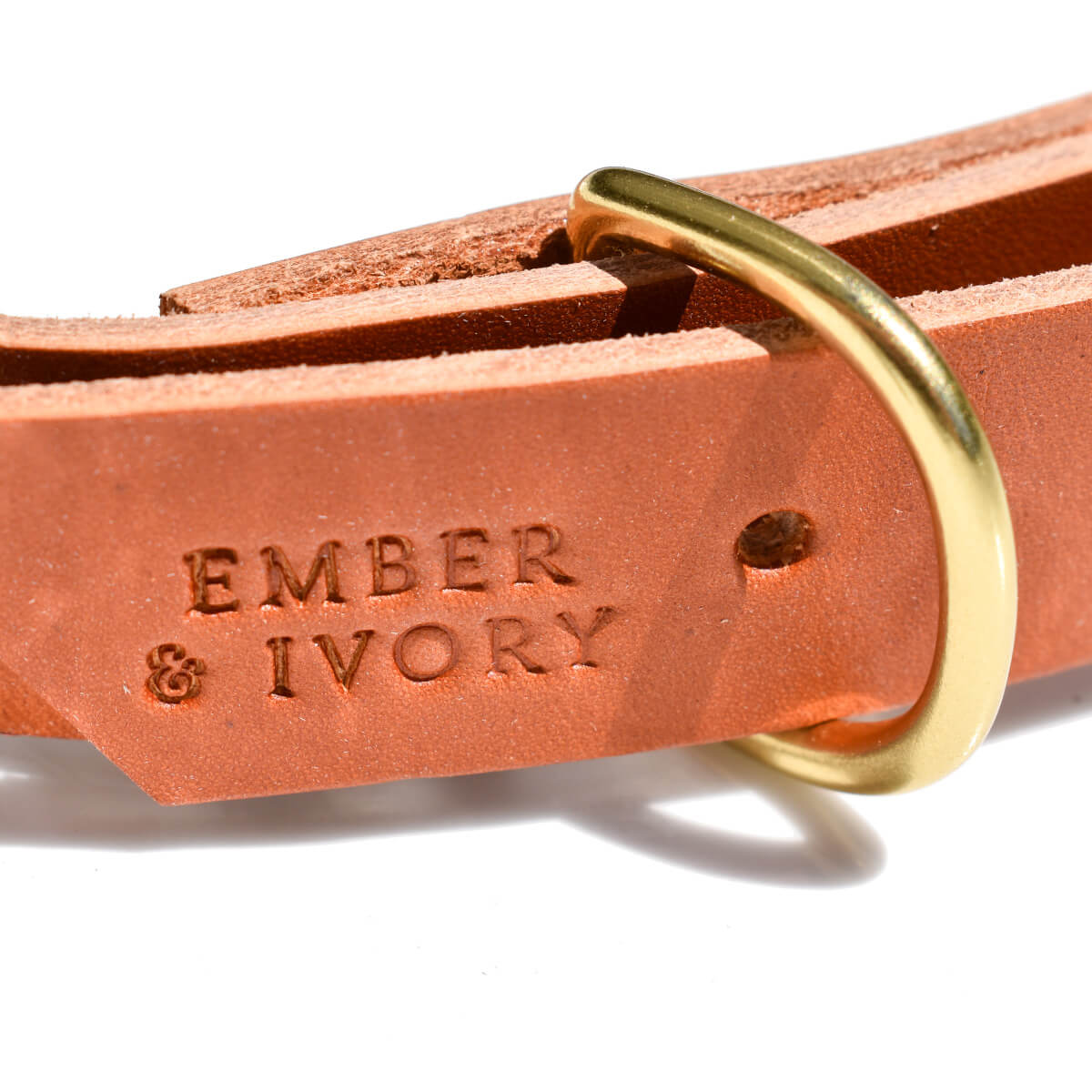
Vegetable tanned leather can be burnished — the edges can be smoothed and sealed using friction and moisture alone, because the natural tannins allow the fibers to bond. Chrome-tanned leather can’t be burnished the same way and is usually painted or glued at the edges. Run your finger along the edge of the leash. A clean, rounded, slightly darker edge indicates quality vegetable-tanned leather.
Check the hardware
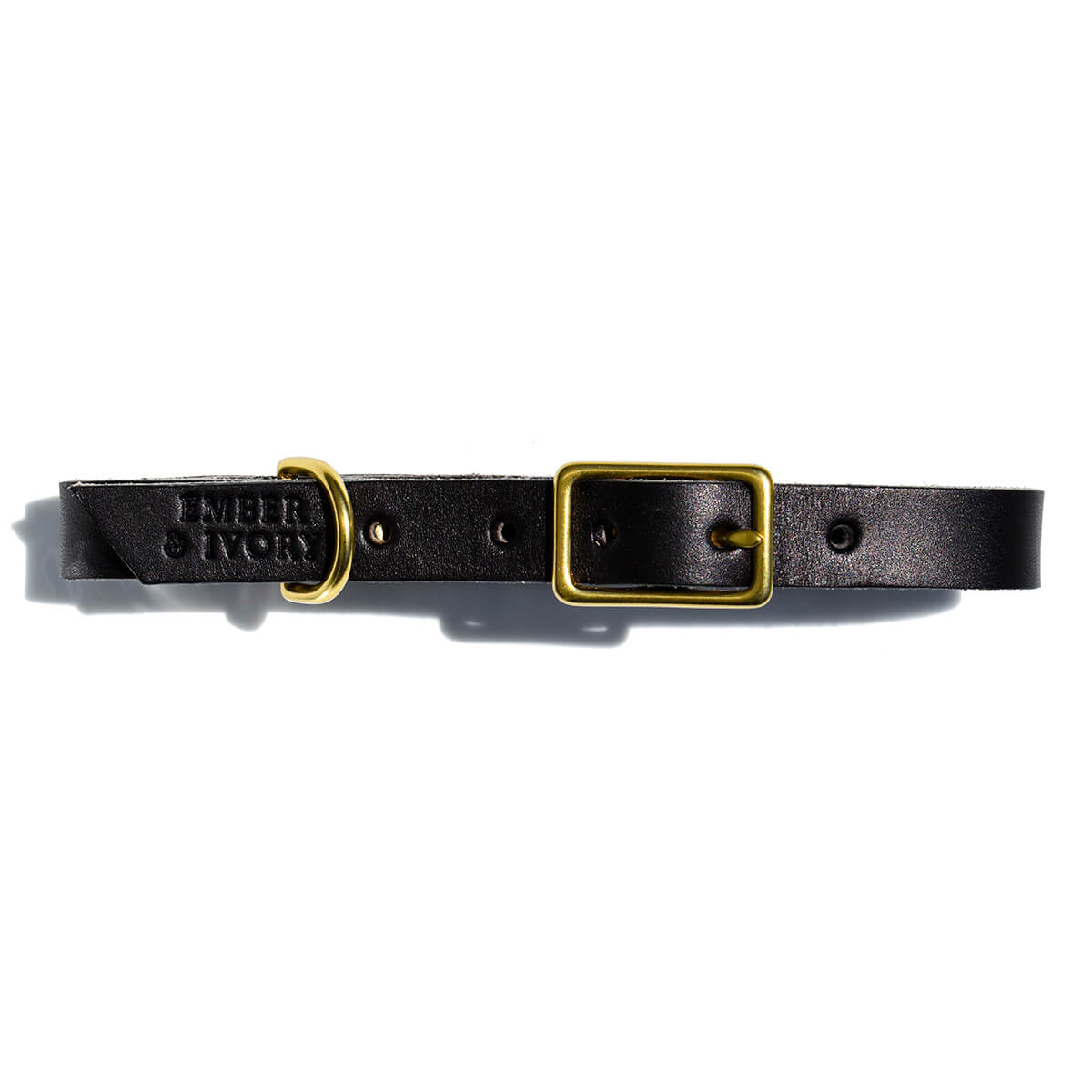
The leather is only half the story. A quality leash pairs quality leather with solid brass or stainless hardware — not zinc alloy or plated metal. Solid brass won’t corrode. Plated hardware will. A swivel snap hook that rotates 360 degrees is worth paying for — it prevents the leash from twisting and puts less stress on the clip with every pull.
Smell it
This sounds strange, but it works. Vegetable-tanned leather has a clean, natural, slightly earthy scent. Chrome-tanned leather smells more processed — sometimes faintly chemical. If you can handle the leash in person before buying, it’s one of the clearest tells.
Consider the price honestly
Quality vegetable tanned leather costs more to produce. A handmade leather leash using genuine full-grain vegetable-tanned leather and solid brass hardware will cost more than a leash from a big-box pet store. That’s not markup — that’s the actual cost of the materials and time. A well-made leather leash should last the life of your dog. Cheap leather leashes generally don’t.
What About the Environment?
Vegetable tanning is significantly more environmentally sound than chrome tanning. The tannins are derived from renewable plant sources, the wastewater is biodegradable, and the finished leather contains no synthetic chemical residues.
Chrome tanning, if not carefully managed, produces chromium-laden wastewater that’s harmful to ecosystems. Reputable tanneries in regulated markets manage this responsibly, but a significant portion of the world’s chrome tanning takes place in regions with little environmental oversight.
This doesn’t mean every chrome-tanned leash is an environmental problem — context and sourcing matter. But if you’re choosing between two comparable leashes and one is vegetable-tanned, the environmental math is straightforward.
Caring for a Vegetable Tanned Leather Leash
A vegetable tanned leather leash will last for years with basic care. Here’s what to do and what to avoid:
- Condition every few months with a natural leather conditioner or beeswax-based product. This keeps the leather supple and prevents it from drying out.
- If the leash gets wet, let it dry naturally away from direct heat. Heat sources like radiators cause the leather to dry too quickly and can crack the surface.
- Wipe down with a damp cloth to remove dirt and salt — particularly important after beach walks where salt water and sand accelerate wear.
- Don’t use silicone-based conditioners or products designed for synthetic leather. They can clog the natural pores of vegetable-tanned leather and affect how it ages.
- Store loosely coiled, not tightly wrapped. Tight storage can crease the leather permanently.
The goal with a vegetable-tanned leather leash isn’t to keep it looking new. It’s to let it become yours — to develop the particular patina that comes from your walks, your dog, your hands.
The Bottom Line
Most dog leashes — including most leather-looking ones — are chrome tanned. That’s not necessarily a problem if you’re buying a $15 leash you expect to replace in a year. But if you’re looking for something that will last the life of your dog, develop genuine character with age, and hold up to daily use without cracking or fading, vegetable tanned leather is the only choice that makes sense.
It takes longer to make, costs more to buy, and requires a little care to maintain. In exchange, it gives you a leash that actually improves with every walk.
That’s a trade worth making.
Shop the leather leash collection at modpup.shop/leashes